Wednesday, September 29, 2021

A very noisy June day in Broadwater (2021)

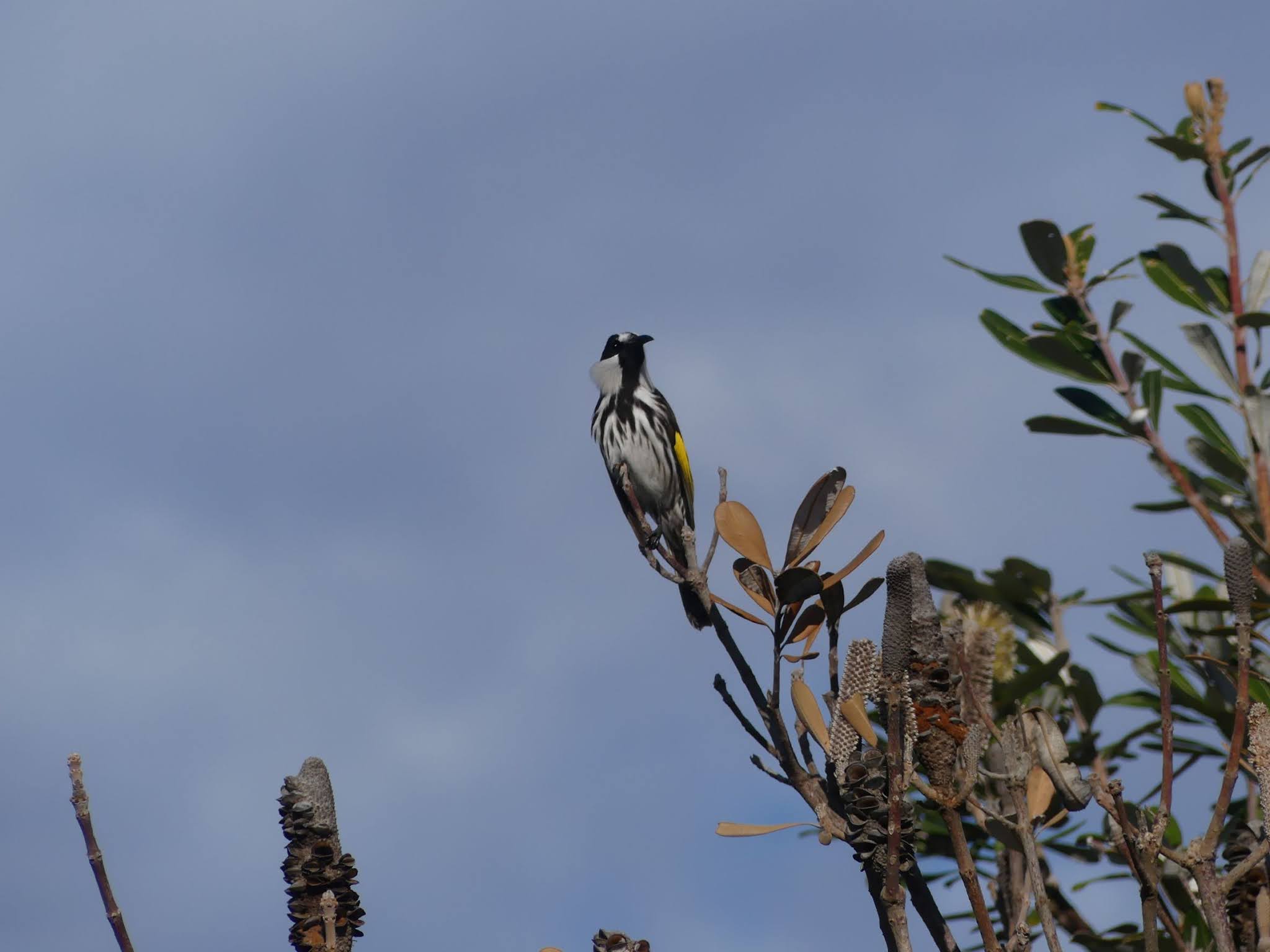
BUT, what a day out in that wonderfully pristine environment. The cacophony was contributed to by noisy friarbirds, butcherbirds, spangled drongos, wattlebirds, white-cheeked honeyeaters with a silent pleasure thrown in for good measure.

Yep, another walk in Broadwater National Park, and once more heading south along Hind Dune trail. This is a long post, but I wanted to try and convey the joy of this day with so many birds showing off and sharing their abundant environment. I hope it goes a little way to doing that justice. Certainly a day I will long cherish and such a treat during this prolonged period of covid restrictions.

Little wattlebird looking to its left

Looking to its right too!


What is a wander in the bush without the dulcet tones of the butcherbird - this is a young grey butcherbird that was perhaps still a few notches shy of dulcet 😉.

This was the first time I had seen more than a couple of spangled drongos in the same location (I mostly sight them as singles). There was quite a large flock - I estimated more than a dozen. It was terrific to be able to get so many clear photos showing off the striking form, the dark (almost foreboding) palette, powerful beak and the gleaming red/orange eyes. Of course, having so many competing in the same spaces meant exposure for me to regular calls. Imagine these mixed with the noisy friarbird and the little wattlebird 😊 ... all quite the harsh contrast to the melodious butcherbird!


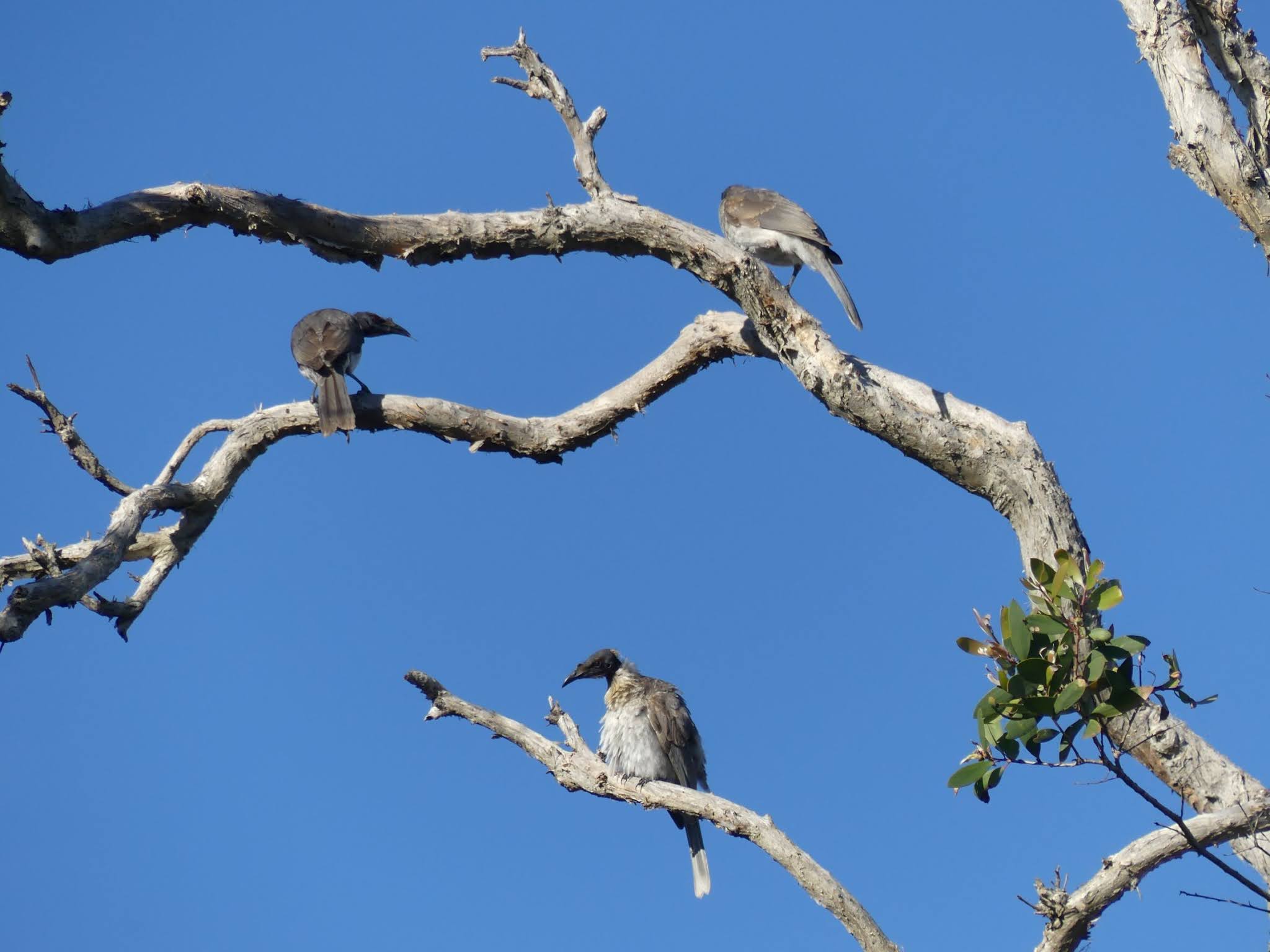
Speaking of striking form, the noisy fiarbirds were also numerous and more widespread along the walk. Their orange/red eye is similar to the spangled drongo, though less "glaring" because of a larger black pupil. Occasionally three or four might be seen squabbling, but mostly they perch in pairs or alone as they move swiftly from bush to bush, but always with plenty to say! The little raised bump halfway along their top bill (upper mandible) is a very distinct feature. Check the "noisy" out here (this is a different site to the regular one I have been using as the recording there was not working).


And interspersed with all the friarbird activity, the little wattlebirds kept making appearances. Once again, imagine this call conflicting (they certainly do not "blend" in any harmony and hence my preference to use cacophony!). Three quite different poses are presented below, and I especially enjoyed capturing the third one with the body arched to ensure the head and bill reach skywards for maximum projection of the call.


I know, I know ... more noisy friarbirds 😝 ... but this is about how pervasive they were this day 😀. And they were especially keen to show-off on wide open and bare perches just begging me to photograph them. How could I refuse such settings? Just enjoy them 😋


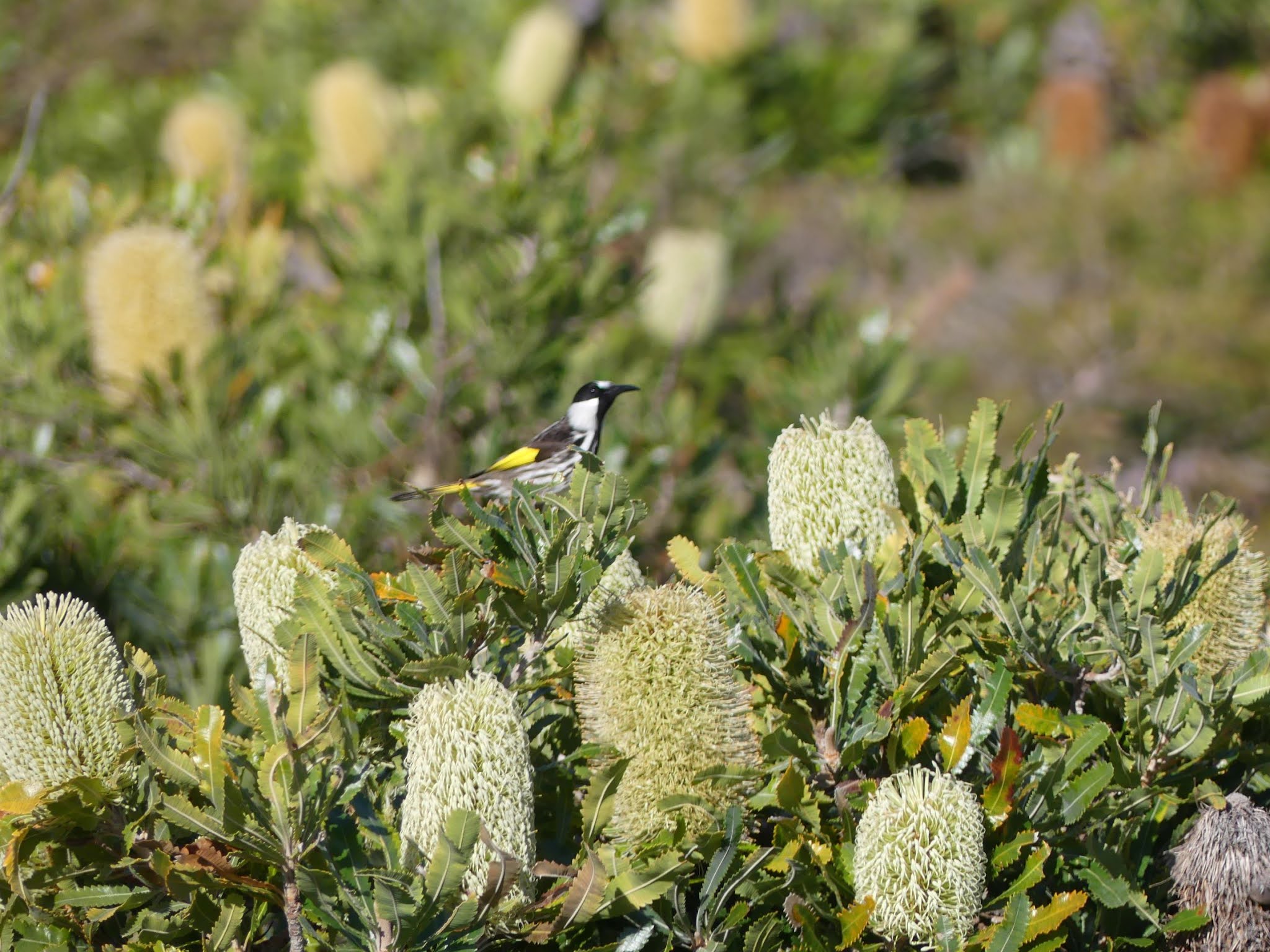
In case you were thinking that the presence of these bigger agressive birds might have frightened the smaller ones, here are some shots of the ever-present white-cheeked honeyeaters. A distinctive sound also gives their activity away - less harsh than the bigger birds but less melodious than a butcherbird. I also decided to include these to demonstrate the impact of cropping some of the images. I am not a fan of post-editing, preferring to take the photo "as it is" and spend more time "out there" and less in front of the screen (enough already posting to my blog!).

So the next three paired images show the cropped photo first and the orginal second in the pair. Really just mucking about and executing a thought I had while I was selecting the photos to share in the post.

White-cheeked honeyeater (cropped)

Original

Same perch looking behind (cropped)

Original

Noisy friarbird lifting off (cropped)

Original


The next set of photos, also presented in pairs are designed to show you how the features (form and palette and visibility - perhaps camouflage) of a bird can vary as their natural surroundings change. Always beautiful, just sometimes more than others 😊. The star of the exhibition making this point is the white-cheeked honeyeater in older banksias and then banksias with a fresh flush.


And now for that "silent pleasure" I noted at the beginning of the post. I have made much of the noise encountered on this walk. Sometimes, however, it is the silence that catches your attention. Coming around a bend on the return walk things had gone strangely quiet. Only sounds were a slight whistle from the wind and the waves on the beach. A pause, a scan of the surrounds ... ah, a splash of colour in a distant tree ... a PAIR of brahmini kites surveying their domain - good enough reason for some silence from potential prey I reckon! The second photo below shows them both ascending the termals shortly thereafter (and the noise had resumed).


And to finish this wonderful day, what else but a few more photos of the dominant species encountered on this visit. I'm sure you will recognise them - if not, you have not been paying attention (probably just looking at the pictures 😲 (and why not!).

What a wonderful local environment we still have.


Not much can be a lot! (June 2021)

This outing I only saw two birds. Each however was a colourful favourite I don't get to photograph nearly enough. So, to get both these on the same day was a real treat for me!

The first one has charmed me since my very first sighting walking down Corks Lane in Ballina way back! Sadly, with the development of industrial sites and roads from the airport, that habitat is rapidly disappearing 😠 - but that is a whole other story.

So this brief post shares these treats for you to enjoy. Both birds also featured in my 2017 Exhibition.

Red-backed fairy wren


The second bird is the splendidly lairy and oh so boldy coloured eastern rosella. In this photo the elusive character is looking rather imperiously at me as I take the photograph - perhaps a simpler way of writing that would be it is "looking down on me"! However I write it, I was privileged to catch and follow the splash of colour in flight before it perched so close.


Country lanes to Tuckean Nature Reserve (June 2021)

Not so long ago I ventured down one of those side roads you notice on a road more travelled, just to see where it went (or in this instance, how it got to where it went). I did not have my camera and it was after some sustained rain so the road was quite muddy and the swamp level disconcertingly high on each side of teh raod in places. I have often driven a local country road loop, taking Marom Creek Rd off Wardell Road and returning back through Rous Mill. One road along the way I am describing is Tuckean Island Rd which runs through swampy farmland, along the western boundary of Tuckean Nature Reserve, crossing a couple of drainage channels and ending up on cane fields along the northern bank of the Richmond River (left to Broadwater, right to Woodburn). Turned out to be a really good drive because it is very isolated and I hardly saw another vehicle or person.

This was my second drive down this road, this time with my camera. 

On the way, however, a detour down another no through farm lane offered some excellent poses in some unusal places for the birds that were photographed. Some times its just worth taking a look 😳.

My initial bird contact for the drive was a flock of sulphur crested cockatoos. Not such regular sightings for me of these locally, so it was good to be able to capture a few showing off the sulphur crest, even if not in full display. They were enjoying the shelter of a large jacaranda.


Heading back on reaching the end of the lane, I spotted the next two birds in different large pines. The laughing kookaburra perched as they often do and actually quite small in the large tree. Not so the white ibis ... perched on one leg and looking ever so majestic and not at all out of place in such a regal position.


My final sighting down this detour was a cheeky peek by this laughing kookaburra. This time it is actually difficult to be too critical of the way the built environment actually enhances the pose - the iron peg foot hold making a suitably sheltered perch for its lookout.

Now, for the various sightings down through the swampy farmland along Tuckean Island Rd. Actually rather dry this time, though the clear evidence of a much wetter environment was clear enough in many places. I relish the opportunity to revisit once we have had some more sustained rain - perhaps it would be a good walking adventure.

White-necked heron

Flock of straw-necked ibis settling

Four very "settled" straw-necked ibis!

A roadside & shaded emerald dove

A white-faced heron perched way up high

Bar-shouldered doves sharing with a willy wagtail


I went left at the end of the road and because it was a small further detour on the way home, a visit to the Broadwater beach lookout. Alas, a very quiet time bird time apart from a pair of pied oystercatchers (very regular sight here) scrounging on the black rocks of the beach below as the tide rises.


Tuesday, September 28, 2021

A quiet May (2021)

Some good time around the backyard again - limited opportunities to be moving around too far. Just the ongoing nature of life with covid ... open one day, not sure the next ... so best not to venture too far just yet.

One damp morning I heard this lewin's honeyeater outside the sunroom. I could hear it; it sounded very close. I was lying on the sofa lounge and eventually located it in the jaboticaba tree. Raining, so the photo was taken through the close window.

A white-headed pigeon was spotted quite high up in some fairly dense foliage but the camera did a grand job finding it for a clear focus 👍. 

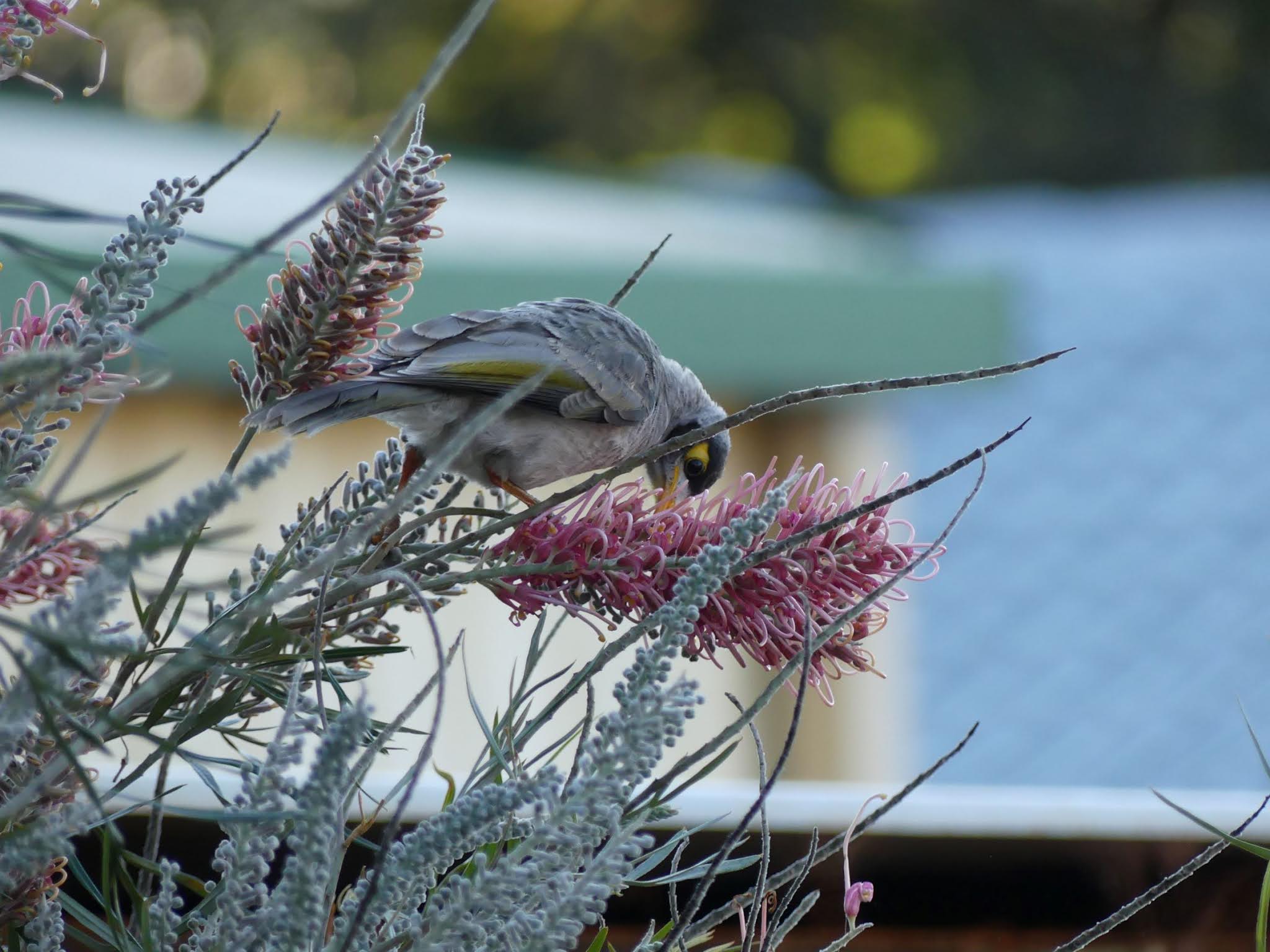
Even the noisy miner can look good in the "right" setting 😀. Here is one feasting on the fresh nectar of the banksia flowers in a bush down the back near our shed and back fence. The way birds are able to access their food from such varied angles is always fascinating.


Wandering around our yard (well, her yard too!) is one of our remaining two chooks.


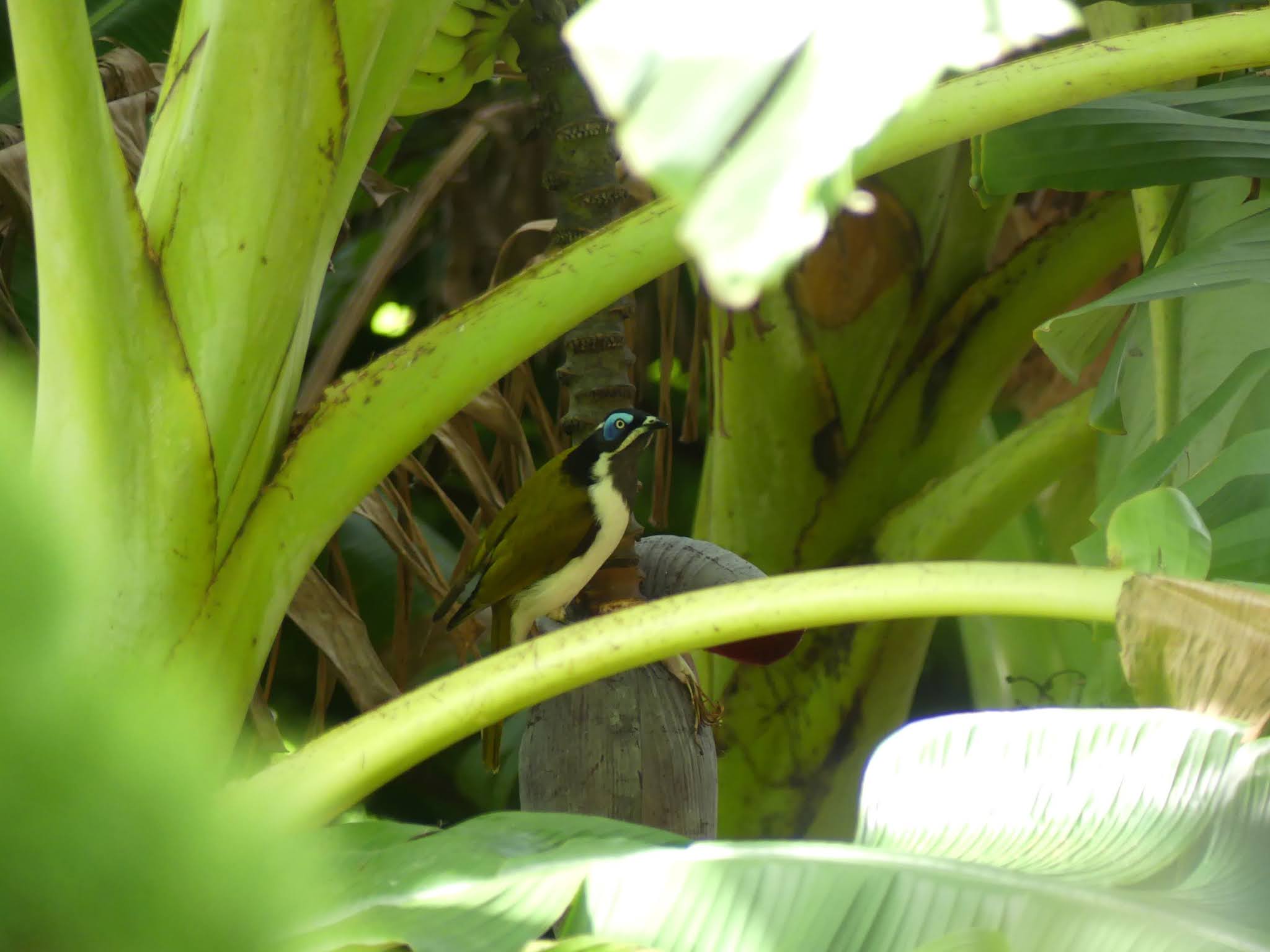
The remaining set for this post show-off a blue-faced honeyeater exploring lady finger banana flower bells for nectar. Acrobatic (they don't mind which angle they seek the flowers from, just like the noisy miner above), but they blend so well in this environment allowing their blue face to be a strong feature. Great to watch these guys - though they can be noisy and aggressive to other birds encroaching their space or food sources 😐.