Showing posts with label Jacky winter. Show all posts

Wednesday, June 23, 2021

Barney Creek mostly small birds (July 2019)

A final post wrapping up this wonderful second visit to Barney Creek Vineyard Cottages featuring mostly small birds. These are always a treat to see and an even bigger treat to get some good shots of because they are so lively. Several of these are rare glimpses I have been able to add to my portfolio.

A pleasing feature for most of these was being able to capture the brids in good light rather than heavily camouflaged environments they are often noticed in.

White-cheeked honeyeater


Kookaburra pair lterally sitting in the old gum tree!

The ubiquitous willy wagtail shining on a wire.

Eastern spinebill feasting on a flower

The next three are showing off a yellow-faced honeyeater. This was a "new" treat for me and the settings and sunshine really show off the reason for the name very well. Such a treat when you m,anage nice clear shots like these showing the agility and camouflage of the same bird.


Jacky winter perched on twig

The next three show two different angles front-on of a golden whistler with the thrid showing off the olive and white wing and back feathers of this beautifully coloured bird with a gorgeous and aptly named "golden" whistle. Easy to hear, not so easy to spot when you hear them, so capturing these with such clarity was another treat for this visit!


A rare stationary grey fantail

The next two shots are of a rose robin, a new bird for me and as you can see another delightful display of colour selection by mother nature to behold. Did not quite manage to get the light right for either setting but each still provide a sense of how tiny but beutiful they are.


The next two are different views of one of my favourite wrens - the red-backed fairy wren. One among some branches into the light, the other on the ground in better light but I was not quick enough before it manged to get its beak behind the grass.


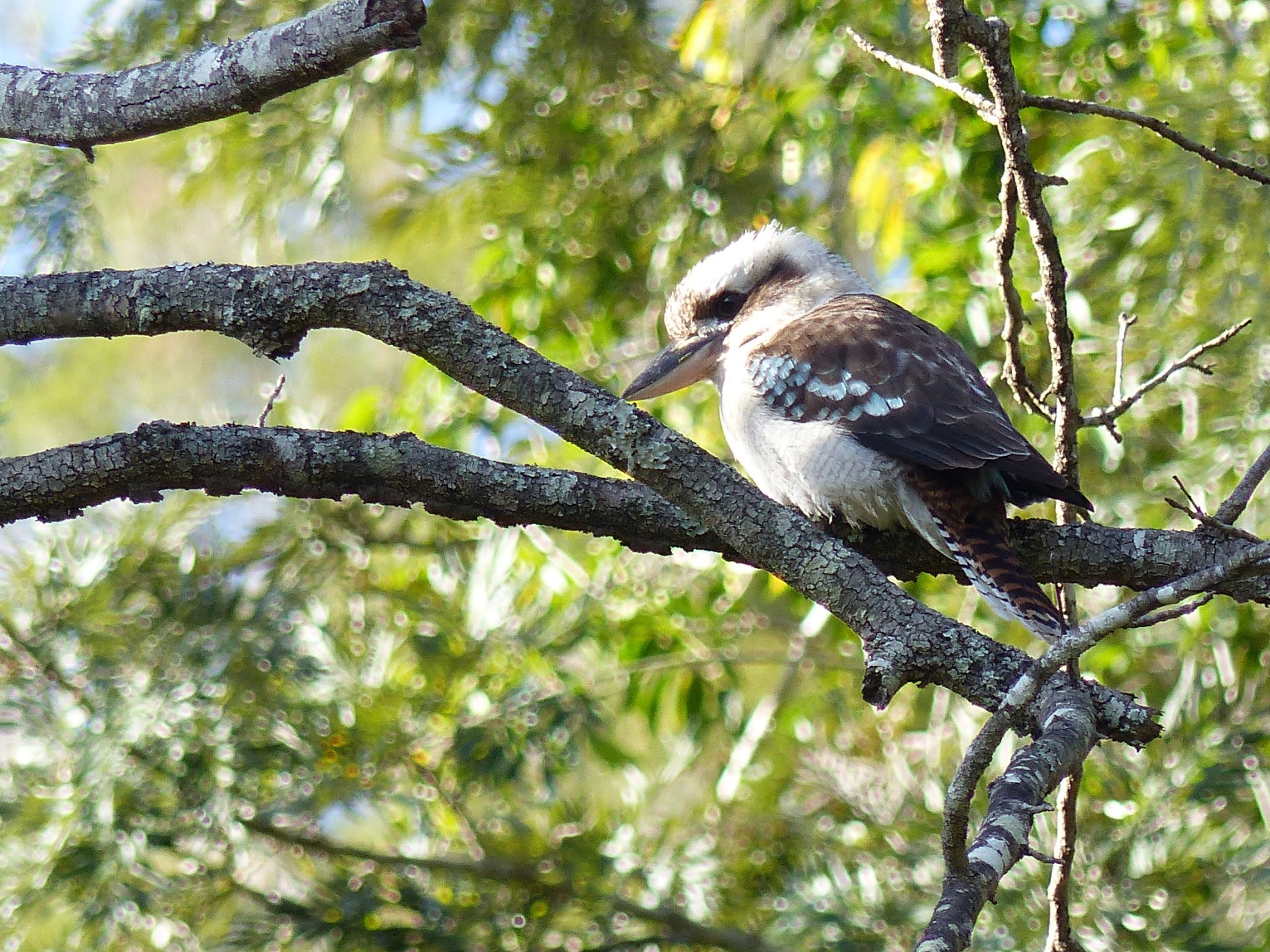
And finally, the wonderful hues on teh wings and fluffly head feathers shown off in the "right" light by this laughing kookaburra - but not in the od gum tree this time.


Saturday, January 30, 2021

(Mostly) Different Dyraaba diamonds (March 2019)

Another very warm day we chose to visit Dyraaba. Very warm just as it had been back in October 2018). Similar delights (apart from the family!) too. This post features four studies - a parrot, two smaller but willing subjects and wonderfully colourful poses in dappled sunlight of a generally "boring & plain-looking" pigeon. Each serves to highlight just how gorgeous birds are in the right conditions - no such thing as a "plain" bird when we take the time to really look at them! Remember, you will get a bigger view of the photos if you click on one ... then you can simply scroll through them.

This time we begin with the wonderful male king parrot, but in a more natural setting rather than being fed like the family back in October. Quite distinctive too. Notice the bare feather patch right in the centre of the chest. Still, such a majestic sight. I offer a few different poses for different perspectives and glimpses ... such a delight! First there is the initial glimpse of that regal king parrot red among the gum leaves; then three more "open" views, the final one a closer zoom offering a brighter view. 


Next I had the peasure of capturing something of a favourite - an eastern yellow robin. I am more used to seeing in the darker confines of the forest at Victoria Park. Here in the more open scrub forest and on the fence post, a stronger sense of its tiny stature is more evident. The subtle grey tomes and yellow are a more clear in the open, though the ability to also "blend in" is far from lost as it sits against the bush background. I chose to also include the second shot because I liked the way it also looks at home and suitably safe among the built environment in teh foreground, contrasting with the bush block background.


Next, another "little" specimen it was good to see again - a jacky winter. Even tinier than he robin, it's pose atop the fence post clearly demonstrates the stature 😊. In (for me), a rare opportunity for a good close-up, the second shot of this study provides a sense of how well they camouflage, but also the ease with which they "fit" into their surroundings and appear larger than life when they allow to glimpse them "up close". 


And, now what was the real and unexpected highlight of this visit for me. The humble white-headed pigeon. I have accumulated a few other photos of these now, and I most often sight them (almost exclusively to this point) on electricity wires after a rain event. They are plentiful. The light at such times has hitherto provided my sense of their "plainness" - white head and chest and grey wings and tail with reddish eyes and dull red feet. Just a plain variation on a feral pigeon! So, the conditions I guess had tainted my sense of a dull pallour and a plain appearance ... SO GOOD to have that refuted with this sighting in a far more natural bush setting with the gum trees offering a wonderful mottled sunlight that is a far cry from the post-rain electricity wire perches I am used to. Pleased to see them in a built environment, but like so much of this world the natural environment offers so much more 😁 - we  need to respect that far more!

I really hope you enjoy the following selections that servie to illustrate the myriad variations in both white and grey that have been disguised and invisible to me previously! Even the feathers turn out not to be so smooth! The irridesence, noted in other pigeons and doves is clear and my previous lack of recognition of this is everythign to do with my powers of observation and nothing else. Time and patience ... looking ... and finally seeing! ENJOY, both the single bird and the pair!


And to round out this post, a couple of shots from our own backyard in an unusual tree we have. The jaboticaba (my spelling) orignates in Brazil and the fruit blossoms along the ranches and look like grapes or very dark cherries. The foliage is a fine small green leaf that offers wonderful coverage for birds. If you want to know a bit more about the tree & fruit, here is what Wikipedia offers. The lorikeets especially devour the sweet fruit once it is "on" (and take care of feeding at day, the fruit bats take over a get drunk at night!) ... here are a couple of photos of rainbow lorikeets in action showing both the nectar and translucent pearly flesh that is in the skin - they are actually very delicious when chilled - break the skin, pit the seed and suck the flesh out). 


Monday, July 20, 2020

Mount Barney birds

So, as promised, this post is dedicated to sharing the variety of birds we had the pleasure of sighting and observing during our three days at Mount Barney. Quite a few of these were new sightings for me ... not surprising given it quite a different habitat to the north coast, but equally, not too far away. But it did highlight for me the way some birds have a more specialised habitat and some others far more expansive habitats. I hope we maintain as many as possible because the variety is wonderful on so many levels (geography, flora, fauna and climate to name a few to savour).

While browsing to select the photos for this and the previous post, I paused after the previous post and was reflecting on my comment therein "This was a wonderful few days of quiet sitting, reading, watching, walking and photographing and then being spoiled with a variety of home-cooked dinners delivered each night to the bungalow." I took 378 photos over the 3 days ... so, yes, in spite of that we did indeed enjoy the peace and quiet and other things - no internet and TV there so seemed a lot more time too (which, of course, is just silly!!). However, to the Mt. Barney birds ... i have kept you waiting long enough ...

A treat to begin with was a glimpse (sadly not a clear shot!) of the distinctive plumage of the bell miner ... the bell bird ... such a beautiful sound driving through wooded hills and mountains. Like that eastern whipbird - easy to hear and damn difficult to sight!

Bell miner

As you will have seen already the kingfisher is a favourite 😌, partly because they are as beautiful as they are small and partly because I have been fortunate to locate a habitat where they are easy to spot and they are willing to be photographed. This you "know" if you have been following the blog and have a look at the labels indicating the sacred kingfisher has featured regularly. So what a treat to see the azure kingfisher on our very first evening over a late afternoon glass of wine on the bungalow verandah looking out over the pond 😊

Azure kingfisher


Next morning a taste of the variety just from the bungalow ... including another new sighting (three of the first four photos of this post!) for me of the lovely and delicate pale-headed rosella.

Synchronised pacific black ducks

Pale-headed rosella

Laughing kookaburra - a home among the gum tree!

And for this next pair pf photos, notice the very happy and gorgeous melody (which of course you cannot hear (hmm ... not self ... good reason to use the video!) of the butcherbird is in full cry ... the second picture provides the reason ... it was flaying a hapless frog (NOT one of those gorgeous little green ones in the previous post I am pleased to report) it had brought up from the ground by the pond to its perch, tenderising for long while before devouring.

The melodic call of the butcherbird

Tenderising a frog for breakfast

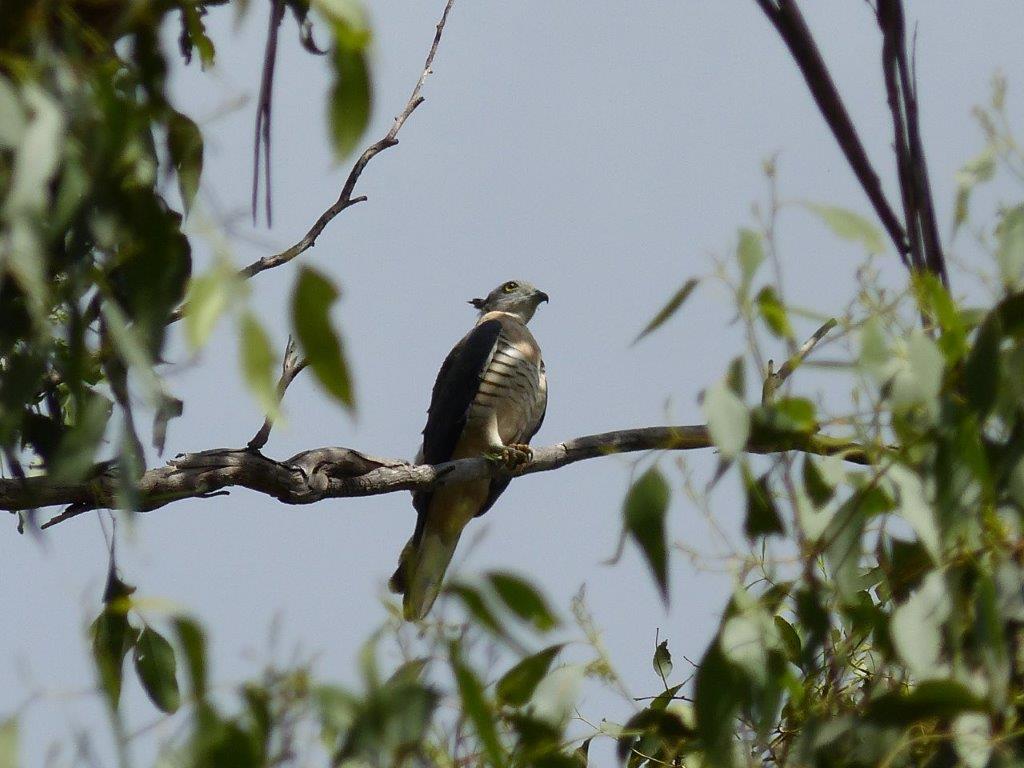
After breakfast, I headed up the driveway and a little further up on the same side of the road as the koala featured in the previous post I spotted the pacific baza with it's military-like bearing on the perch in a eucalyptus. Another new sighting for me, as was the following couple of shots at the very top of the driveway of the "little birds", not to be left out of the scene 😊

Pacific baza

Little jacky winter sitting on a post

Little jacky winter resting on a wire

Further along the road in paddocks off to the left (east) were three more new finds for me. A couple more of the delicately beautiful pale-headed rosellas perusing their grassy habitat and showing off their gorgeous plumage. Then a majestic (young) white-necked heron and also foraging in the grass a common bronzewing pigeon. And in this set, the final glimpse on the return trip to the bungalow was the beautiful king parrot way up in the silky oak (don't worry, have some excellent shots of these in coming posts!).


White-necked heron

Common bronzewing

King parrot

Then to top of a fantastic day of new sightings, we had a return visit late in the afternoon again from the azure kingfisher (well, I am assuming it is the same one). The light was much  better than the first evening too.


Then, on our final morning we had a visit from a small flock of scaly-breasted lorikeets. Same kind of glares and agility and raucous presence as the rainbow lorikeets, but a less gaudy colour palette as the name suggests 😉. And a couple of "black birds" by the pond.


Spangled drongo

Little pied cormorant

And finally, as we headed away on our departure, and after a short morning tea visit to Boonah, we had the great honour of spotting the grand-daddy of our avian tree in Australia ... off in a paddock, perched proudly on dead tree branch surveying its kingdom was the wedge-tailed eagle. Ah 😀 ... I had to brake quickly, turn around on a crest and head back to pull-over and hope that it was still there waiting for me ... how fortunate we were! 

Wedge-tailed eagle

Quite the end to our first venture to Mt. Barney.