Tuesday, November 21, 2023

Tassie II - mostly waterbirds

This post is mostly dedicated to waterbirds sighted in and around the western tiers and north central area of Tasmania. A feature will be the young ones - cute but also highlighting the early struggle that their life can be!

This first series of photos was taken along a walk around a lake and gardens at a delightful rasberry farm cafe just out of Deloraine. The first two offer a Tasmanian native hen showing off for the camera - first with a spread of the wings while looking down the lens of the camera; second with a slight sideways glance and model's cross-legged step 😀.


Out on the lake, sadly with no willingness to drift or dive closer, was this grebe. The light is not entirely kind, but I think it might a hoary headed grebe by the dark stripes along the head. Not seen one of these before.

Next out on another part of the lake with much better lighting having moved around further, was this pair of chestnut teals showing how much more flamboyant the male plummage is. Also not keen on drifting too close!

Finally from this location, a parent and young native hen grazing. The chick is mimicing the parent closely. 

The next set of three photos are from our western tiers B&B grounds. First up another shot of the so far elusive green rosella, this time on the grass giving a sense of how it is their movement that gives them away not their camoflage.

There was a walled courtyard through which you drove to your parking bay. Wandering along the outside of this wall one day I snapped this sparrow keeping an eye on me as it was basking atop the wall among the grasses enjoying the sunshine.


Then looking across our front courtyard into the wonderful garden, this common blackbird was perched on a branch allowing the surrounding foliage to show off how they can look so wonderful (despite being pests).


The next five photos were taken while walking along various paths beside the Meander River in Deloraine. They feature newborns, with one exception. 

The first features three very young pacific black ducklings learning their craft; second and third show a protective native hen guarding and guiding her new chicks - small black fluff balls! The fifth photo shows a native hen with a larger brood of chicks in its care grazing along the river bank.


This fourth one in the set has no young ones - it is a mallard enjoying the afternoon space on the river.


The next two photos are offered for context. The first is a black currawong, endemic to Tasmania, perched high atop a pine tree just below Dove Lake at Cradle Mountain. I included the second photo, panned back, just to highlight the wonderful environment that is "lost" by zooming in. Different pictures allow different thousand word stories to be told!


The final series of photos I have labelled individually. They were taken during our return on a day trip to Launceston. We stumbled on the Tamar Valley Wetlands. Gloomy afternoon and some showers before we made it all the way round, but here is a glimpse of what we saw on the tidal flats & grassed areas at low tide.

Pacific black ducks with a lone chestnut teal


A purple swamp hen

A black swan making haste for the water


A black swan watching over cygnets

A black swan checking out a pool


A skittish european goldfinch in the grass

A superb fairy wren also in the grass


A purple swamphen chick struggling through the mud
looking for mum

Found her  ... looking with envy to be able to move
so easily through the mud!


Monday, November 20, 2023

Tassie I

After lots of planning and getting organised we set off for our driving holiday to Tassie. We took 3 days to reach Geelong via the Pacific and Hume highways and few lesser roads to skirt Melbourne. Fortunately uneventful and a good shared driving experience to get us underway.

We had a full day in Geelong awaiting the Spirit of Tasmania evening embarkation and departure. We had a good walk along the foreshore and several hours in the Botanic Gardens enjoying the flora and fauna.

Here are three birds we saw in the gardens. 

First is a pied currawong with the distinctive strong curved beak and yellow eye ring. 


Next is a magpie foraging among the dandelions, the second photo showing the rewards of a successful hunt. These southern magpies have a much fuller white shoulder and back patch.


This next pair was a treat for me as I have not previously photographed one. So to have such willing subjects and different perches was a bonus. The red wattlebird is shown off in all its glory in each photo. 


After our ferry crossing and early morning arrival in Devonport, we had until mid-afternoon before our accommodation would be ready. We decided over breakfast to head out to the Tasmanian Arboretum and explore what it had to offer, given it was a lovely clear and warm morning.

Here is a selection of birds we were fortunate enough to glimpse.

First up a welcome swallow posing on a rail showing off its prey in the beak. Fast insects, faster swallow!


Next up was a common blackbird, the first of MANY we were to see thoughout the coming weeks. Noticeable was the more orange (than yellow) eye ring and beak compared to those I have previously photgraphed on the mainland.


On a raft in one of the lakes were several species of ducks soaking up the morning sun. Chestnut teals on either end and the middle; two pacific black ducks second from left and the larger pair second from right are Australian shelducks.


Next up are a series photos featuring black swans. First, a pair shepherding a pair of cygnets around the pond; second a pair floating without movement - one neck up (presenting a wonderful reflection), one down; finally, a threesome also showing their ability to float without rippling the water on a still pond all with their graceful necks extended.


Here is our first sighting of the prolific superb fairy wren. These were common almost everywhere we went. Noticeable immediately was the deeper shade of irridescent blue these wrens have in Tassie. Makes them (in my view) even more striking than our mainland ones.


Next photo of an equally prolific bird - a Tasmanian native hen with the "soft" yellow beak and the distinctive orange eyes. Like many ducks we saw, and other birds and animals it was spring time and many young were sighted and enjoyed as they began their explorations of their environments and learning how to feed themselves.


Finally on day one we reached our first B&B near Mole Creek in the Western Tiers where we were spending our first week. We were greeted by (well, first by our hosts!) this pair of superb fairy wrens, the 2nd photo showing the male in flight shortly thereafter. The second bird welcoming us provided our first (alas fleeting for now) glimpse of the green rosella (more later of these beautiful creatures).


A quiet 3 months (Aug-Oct)

For a variety of reasons, mainly health related, this period was relatively quiet. Of course, preparations for our long-awaited driving trip to Tassie occupied much of our time too.

The selection below shows a variety of regular birds along several common areas we walk. "Regular" in terms of sightings they might be, but as usual, they also offer different appreciations of the capability and beauty of the birds.

First up I managed to frame this osprey alighting from the top of a riverside pine. More usually I photo these in static poses.


Next a youngish prancing plover (masked lapwing) just about to disappear into the shadow of a telegraph pole.


The next two photos show a rainbow lorikeet and a crested pigeon. The lorikeet is feasting on the nectar of the banksia flower while keeping a very keen eye on the photographer. The pigeon is in the same bush and roosting among the flowers to complement its wonderful plummage and also keeping an eye on the photographer.


Here is a pied cormorant basking on a boulder along the wall in the morning sun. The sheen on the wings and the black collar and head streak contrast strongly with the white neck and chest. The yellow beak is also a clear further contrast.
  

The same beauty of the soft pastel palette is perhaps even more apparent with this crested pigeon grazing on the grass among the clover, compared to the perch in the banksia shown above. Both have their own charm.


From pines, to banksia, to grass, to rocks, a plainer bare branch context against our wonderfully clear blue sky shows off the magnificent sounding (and looking) pied butcherbird. 
 

And a youngish magpie listening and feeling for any movement underground before it digs out the underground prey.


Showing off both the grass and rocky context is this white ibis preening its chest while balancing on a single leg ... such dexterity while ensuring they look their best 😁.


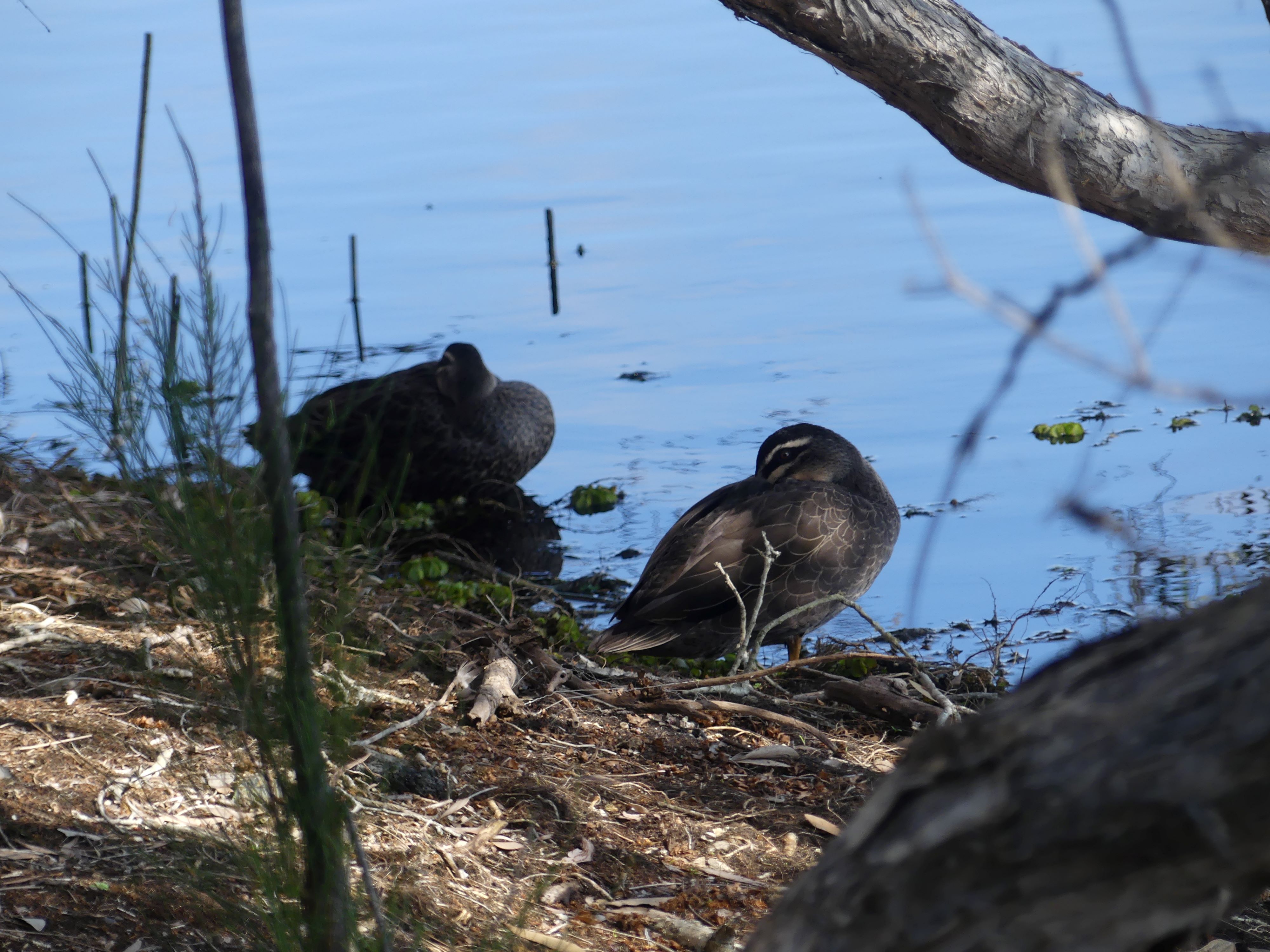
A pair of pacific black ducks by the edge of the lake enjoying some anonymity in the shadows.


The next two photos show a pair of welcome swallows enjoying the afternoon sun on their highwire perch. One caught at the beginning of a dive, and then in the second photo it has returned to the (deserved) admiration of its partner!


Another photo showing the acrobatic skills of the rainbow lorikeet.


Finally, just prior to our departure, a brush turkey decided he was going to build a nest in our front yard 😟. You can see in the first photo the spread of dirt behind the red flowers ... it had been moved there by the turkey from the nice clean path beside the birdbath. The next position was off to the left under a native magnolia tree ... the second photo shows to proud builder working the dirt & debris into position under the tree. On our return (mid-Nov) the nest is MUCH bigger and the yard much less tidy but boy, can these guys move a lot of material around in a short amount of time!


Catching up - no birds!

Yes, its been a while between posts! Almost the end of November ... and we have just returned from an extended trip around Tasmania. So I have some catching up to do.

I thought I would begin the catch up with a "no birds" post 😉. A feature of our trip, both in Tasmania and the mainland on our return drive, was the sightings of some key native fauna other than birds. Each a treat because we are not used to seeing some of them on a regular basis, or even hardly at all.

So here are a few pics to highlight and share these unexpected delights as our trip unfolded.

First up is the platypus - who would think you could (almost) hear yourself think you were sick of seeing platypus (just kidding!!). Our first day in Tasmania we had several hours to fill before our accommodation was ready and decided to check out the Tasmanian Arboretum in the hills just outside Devonport. What a wonderful job the volunteers do with this attraction!

We hoped we might see one. Well, on such a beautiful, still sunny day we saw six across several ponds. The first photo was the pick of many on this morning. The second photo was at the equally impressive Emu Valley Rhododendrom Gardens just outside Burnie on our final day. The weather was equally impressive and the three platypus we sighted were even more photogenic - even blew me a bubble!! There was one other location (Mole Creek Hotel) where we were also blessed with multiple sightings but these are the pick of my photos.

What a treat to finally have so many opportunities to enjoy these unique creatures in their wild habitat!


Next up was a grazing wombat, content and unafraid beside a walking track on our way back down from Dove Lake at Cradle Mountain. I've seen these guys in the wild only once before down around Canberra and for my wife it was a first and exciting sighting.


When we arrived at our accommodation on the east coast, a wonderful B&B 5km off the main road on a wildlife reserve, were immediately immersed in the "reserve" nature of the property. While taking our bags into our space we were met by an echidna making its way along the garden path 😁. When putting our bags in our room, out the window were grazing wallabies, several of them with joeys. Quite the welcome (and that is not to downplay our gracious hosts!).


Our last couple of nights we were hosted in Rocky Cape National Park at a B&B run by a retired zoologist - fascinating lady, great host. She had all sorts of interesting tales about the wildlife on her property and took me on a very interesting tour around it explaining much about its history and native occupants. Her garden was a riot of colours & scents from spring flowers, shrubs and veggies so plenty of small birds as well. However, she kept telling us about the small mammals and lo and behold, one of them, and antechinus (entirely new to us) turned up on her front verandah one afternoon - this one I managed to catch having a word with us too. Check out the link and you find out they are more randy than rabbits!!


The property was largely self sufficient and I have to share these pictures of a new calf (Edie) and her mum one afternoon when we went to visit them in their paddock. The milk (daily) is pasteurised in house and was delicious! From that also came home-made yogurt which I am told was also delicious. Like all babies - cute ... then, of course they learn from adults and grow up!


Sadly, there was loads of road kill involving all kinds of animals (and birds) both in Tasmania and back on the mainland. Mostly kangaroos and wallabies. We were fortunate to see many wallabies in Tassie along our walks and then back on the mainland I share the following one from the magnificent Winton Wetlands. Our return journey on the mainland took us to Benalla and on checking into the Motel a brochure caught my attention and I headed out before dinner just to "see it". No idea of its significance and certainly not how vast it was! I spent a couple of hours driving around various tracks in the limited time I had  - what a treat and I hope one day I shall return for a much more extensive exploration. Treasures we are ignorant of! Here is a family of kangaroos that appeared perplexed to have their afternoon drink interrupted as I came round a bend - I love their curiosity at the interloper and was even mroe grateful to have captured that explression. So this is my tribute to all those kangaroos and wallabies (dead and alive) we saw and a reminder of how they should be in their environment.


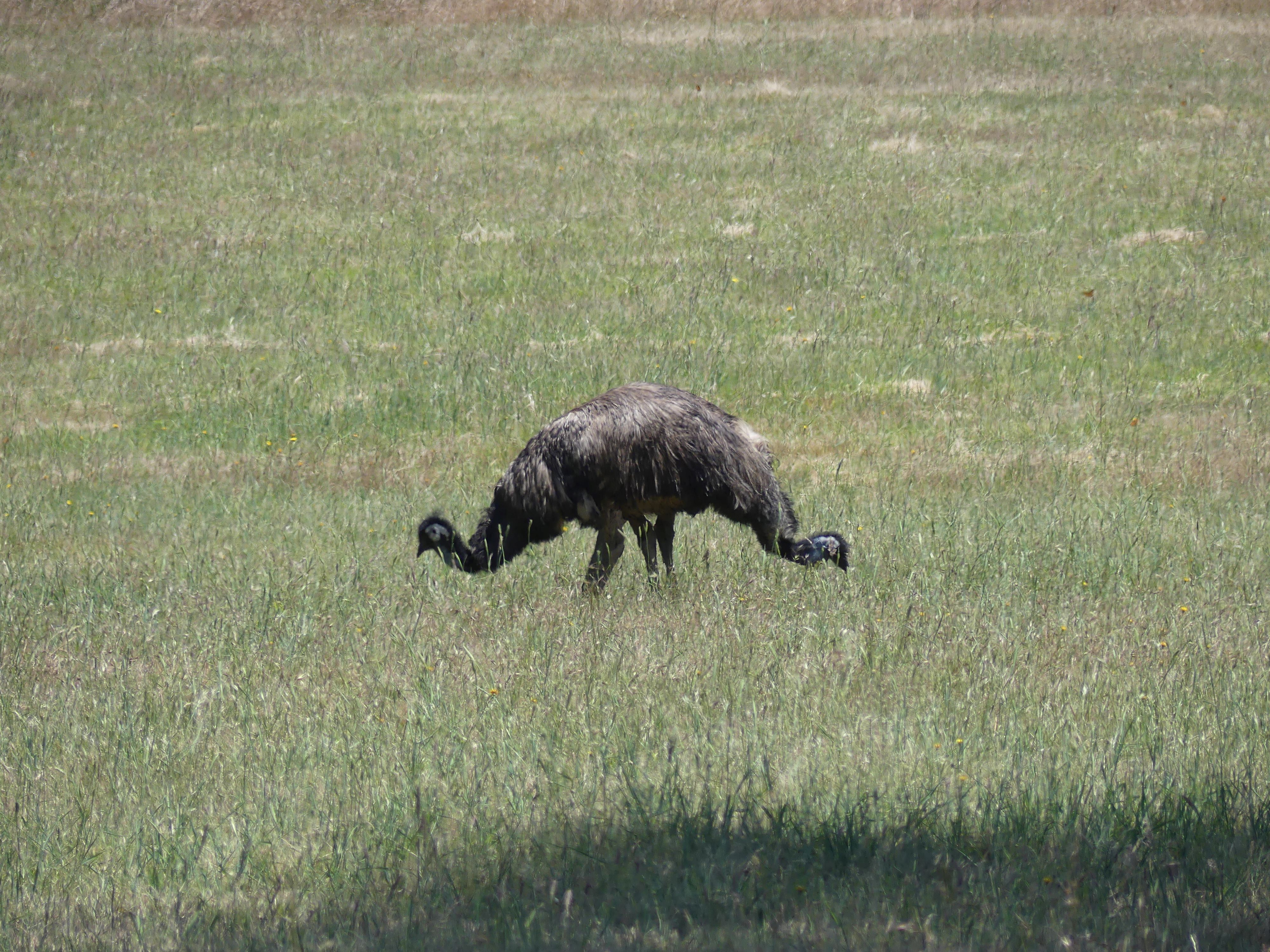
And finally, at several points during the mainland return leg we sighted emus - the second half of our national emblem. Again, not very common for us on the coast these days. This photo shows "siamese twins" grazing in the Puckapunyal Army Base grounds.


And yes, the emu is a bird, I know. So let it be a reminder to me to get on with the catch up ...